
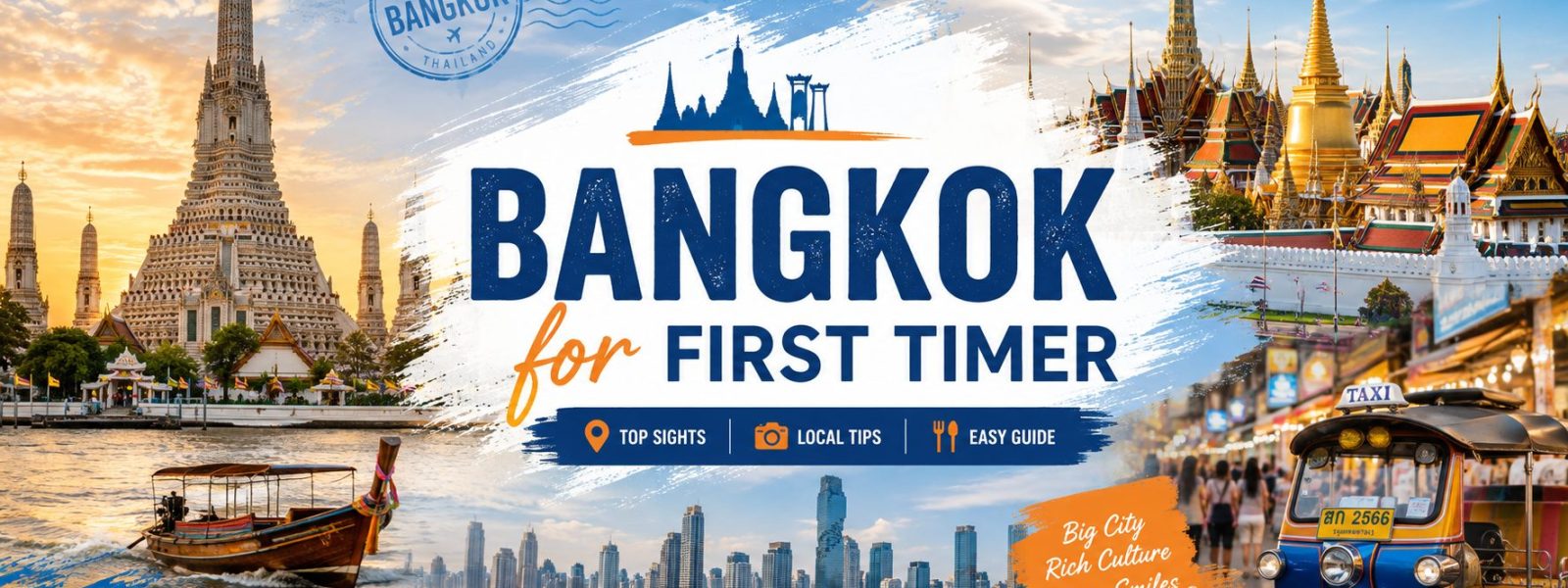
Bangkok hits newcomers with a wall of heat the moment the cabin door opens, then hands them a completely different city depending on where they end up first, glass towers and rooftop bars along Sukhumvit, noodle smoke and gold-shopfronts in Chinatown, or the quiet, incense-thick lanes around Wat Pho. None of that has to feel overwhelming. A handful of small preparations, the right apps loaded before takeoff, a bag packed for heat and sudden rain, a basic grip on how money and manners work, turn the first two days from disorienting into genuinely enjoyable.
This isn’t a generic packing list recycled from a hundred other travel sites. It’s the specific stuff a first-timer actually needs to sort out before landing at Suvarnabhumi or Don Mueang: what to download while there’s still airport wifi, what to fold into the suitcase, how Thai baht behaves day to day, and the etiquette basics that keep a temple visit respectful instead of embarrassing. Grouped below by topic, with real answers, not filler.
Apps to Download Before You Land
Do this on the plane’s wifi or the hotel wifi the night before, not after clearing immigration with a dead SIM and no data. A few minutes of setup here saves a lot of standing around at arrivals trying to figure out how to get a ride.
What apps do I need for Thailand?
Five earn a permanent spot on the home screen: a ride-hailing app for getting around without haggling, a translation app with an offline Thai pack, Google Maps with the Bangkok area downloaded for offline use, a messaging app called LINE that locals actually use, and a currency converter so prices make sense at a glance. A banking app that lets travelers freeze cards or check foreign transaction fees from the road is worth having too.
Which ride-hailing app should I download before landing?
Grab is the one that matters in Bangkok, and it works much like Uber does elsewhere: fare shown upfront before confirming, driver details and plate number sent to the phone, cashless payment or cash on arrival, no haggling over price with a driver who doesn’t speak much English. It’s reliable for hopping between Sukhumvit, Silom and the Old Town once settled in. For the actual arrival at the airport, though, curbside pickup can be genuinely chaotic, with designated pickup zones that shift, long queues, and drivers who cancel when traffic looks bad. That’s exactly the situation where booking an airport transfer ahead of time, with a driver already waiting with a name board, saves the first hour of the trip from being spent standing in a car park.
Should I get a Thai SIM card or use an eSIM?
Either works. An eSIM bought through an app before departure activates the moment the plane lands, which means Grab and Google Maps are usable from the jet bridge onward. Travelers who prefer a physical SIM can pick one up at the AIS, True or dtac counters in the arrivals hall, all clearly marked and reasonably quick even with a short queue. Whichever route gets chosen, having working data before stepping outside the terminal makes everything downstream easier, from finding transport to messaging a driver.
What translation and messaging apps are actually useful here?
Google Translate’s camera function is the one that gets used constantly, pointed at menus written only in Thai script, street signs, or medicine labels in a pharmacy. Downloading the offline Thai language pack means it still works without signal in a basement food court or a songthaew with no reception. LINE is worth installing too. It’s the default messaging app across Thailand the way WhatsApp is in Europe, and hotels, tour guides and private drivers often prefer it for sending pickup confirmations or location pins. Anyone wanting a broader rundown of small mix-ups first-timers make, beyond apps, can check this guide to avoiding common Bangkok travel mistakes before the trip.
Packing for Bangkok’s Heat, Humidity and Sudden Downpours
Bangkok sits close to sea level and near the equator, so the climate doesn’t really do “mild.” It’s hot most of the year, humid nearly all of it, and capable of turning a blue sky into a downpour in the time it takes to walk one soi.
What should I pack for Bangkok?
Lightweight, breathable clothing that also covers shoulders and knees for temple visits, a compact umbrella, comfortable and easy-to-remove shoes, a reusable water bottle, sun protection, insect repellent, a portable phone charger, and a universal power adapter. Pack light on outerwear and heavy on quick-dry fabric. Anyone who overpacks wool and denim for a Bangkok trip will regret it by the second afternoon.
What clothing actually works in the heat and humidity?
Cotton and linen breathe far better than synthetic blends, and loose-fitting clothes beat anything tight against sweaty skin. That said, pack one long-sleeve layer or light cardigan too, because Bangkok’s air conditioning in malls, the BTS and private vans runs aggressively cold, a strange contrast to the street outside. A light scarf or sarong is genuinely one of the most useful things to throw in a day bag: instant shoulder cover for a temple, a barrier against a blasting AC vent, and shade in a pinch.
Do I need to prepare for rain even outside the rainy season?
Yes. Afternoon storms can roll in even during the drier months, usually short but intense, the kind that floods a sidewalk in ten minutes and clears just as fast. A compact umbrella handles this better than a rain jacket, which tends to trap heat and turn a person into a sauna. A small dry bag or waterproof pouch for the phone and passport is worth the little bit of extra space it takes.
What shoes and health items should make the cut?
Slip-on shoes or sandals save enormous hassle, since shoes come off constantly, at temples, some shops, guesthouses and plenty of homes. A sturdier pair for uneven, cracked sidewalks is worth packing alongside them, since Bangkok’s pavements are not always kind to ankles. On the health side, pack any personal prescription medication in its original packaging, basic rehydration salts for hot days spent walking, something for motion sickness if boats or winding van routes tend to cause trouble, and a DEET-based repellent for evenings near canals or parks.
Money, Cards and Everyday Spending
Thailand runs on a mix of cash and card that surprises a lot of first-timers who expect one or the other to dominate.
Do I need cash or card in Bangkok?
Both, and knowing when to use which matters. Hotels, malls, chain restaurants and most Grab rides take cards without issue. Street food stalls, local markets, small songthaews, some independent taxis and tiny neighborhood shops are cash only. Carrying a mix of larger notes for bigger purchases and smaller ones for street vendors avoids the awkward moment of trying to pay for a bowl of noodles with a note the vendor can’t break.
How should I carry and access money day to day?
ATMs are everywhere, attached to banks, inside 7-Elevens, in malls, and each withdrawal carries a foreign transaction fee, so fewer, larger withdrawals generally work out better than frequent small ones. Splitting cash between a wallet and a separate bag pocket, rather than carrying everything in one place, is a smart habit in crowded markets. A travel-friendly debit card that waives foreign ATM fees is worth setting up before departure, and letting the home bank know about travel dates avoids a card getting frozen mid-trip over a flagged transaction.
Should I exchange currency before arriving or after?
Exchanging a small amount before or right after landing, just enough to cover a taxi or a meal, is sensible. For anything larger, exchange counters in the city, particularly the well-known chains found in shopping areas like Silom and Pratunam, tend to offer noticeably better rates than airport counters or a bank back home. There’s no need to carry a big wad of foreign cash around Bangkok; converting as needed is simpler and safer.
Is tipping expected, and how much?
Tipping isn’t baked into Thai culture the way it is in North America, so nobody is offended by its absence. That said, rounding up for a taxi or private driver is appreciated and increasingly common, and leaving a small note for hotel housekeeping is a nice gesture. Many restaurants already add a service charge to the bill, in which case an extra tip on top is a kind gesture rather than an expectation.
Temple Manners and Everyday Etiquette
Thai culture is generally relaxed and forgiving toward visitors who make an honest effort, but a few specifics are worth knowing before stepping into a temple or a stranger’s home.
What’s the dress code for visiting temples?
Shoulders and knees covered, for men and women alike, with nothing too sheer or low-cut. Some of the busiest sites, the Grand Palace especially, enforce this strictly and will turn away anyone in shorts or a tank top, though sarongs can usually be borrowed or rented at the entrance. Packing that scarf mentioned earlier solves this problem before it becomes one.
Do I really need to take my shoes off?
At temples, yes, always. Beyond that, shoes come off at many shops, some restaurants, most homestays, and plenty of private homes. The easiest cue is a pile of shoes by the door, that’s the signal to add one’s own to the pile. It’s another reason slip-on footwear makes life easier than lace-up boots.
What is a wai and should I do it?
The wai is the pressed-palms, slight-bow greeting seen everywhere in Thailand, from hotel staff to monks to street vendors. Higher hands generally signal more respect, and it’s used both as hello and thank you. Visitors aren’t expected to initiate one with everybody they meet, but returning a wai when offered, with a small nod and a smile, is polite and genuinely appreciated. There’s no need to overthink the exact hand position; the gesture itself is what counts.
What other cultural habits should I know about?
A few small ones go a long way. The head is considered the most sacred part of the body, so touching someone else’s head, even a child’s, is best avoided. Feet are the opposite, so pointing the soles of the feet at a person, a Buddha image, or a monk is considered rude, worth remembering when sitting cross-legged on a temple floor. Keeping a calm, even tone in public disagreements matters more here than in a lot of Western cultures, since raised voices and visible frustration cause everyone involved to lose face. And women should never hand something directly to a monk; setting the item down for him to pick up, or having a man pass it, is the correct approach.
Orientation Basics Before You Touch Down
What should I know before visiting Bangkok for the first time?
Bangkok is enormous and sprawling, and traffic away from the BTS Skytrain and MRT subway lines can be brutal, so building extra time into any plan that involves road travel between neighborhoods is wise. The city’s districts have distinct personalities: Sukhumvit is business hotels, malls and nightlife; the Old Town around Wat Pho and Wat Arun is temples and river views; Chinatown (Yaowarat) is street food and gold shops; Thonglor and Ekkamai lean toward trendy cafes and design shops. The soi (side street) numbering system takes a little getting used to too, since odd and even numbers run on opposite sides of a main road and don’t always line up neatly. For entry requirements and any arrival paperwork, it’s worth checking the current rules on official government sources close to the travel date, since these details change and are easy to get wrong from an old blog post. For more of the small mistakes that trip up newcomers, the common Bangkok travel mistakes guide is a useful companion read before departure.
What time zone and plug type does Thailand use?
Thailand sits in a single time zone year-round with no daylight saving adjustments, which makes it easier to plan calls home than in places that shift twice a year. Power sockets are a mix of type A and type C, and many hotel rooms have hybrid outlets that accept several plug shapes, running on 220-volt current. Most modern phone and laptop chargers handle that voltage automatically, but a universal adapter is still worth packing since plug shape, not voltage, is usually the actual problem.
Will people understand English, and should I learn any Thai?
English is common enough in tourist areas, hotels, malls and among BTS staff, with signage generally bilingual on major transit lines. Drivers, street vendors and smaller shop owners may only know a handful of English words, which is exactly where a translation app earns its keep. Learning a few basic Thai phrases, sawasdee for hello, khob khun for thank you, and mai pen rai for “no worries” or “it’s fine,” costs nothing and tends to earn a genuine smile in return. It signals effort, and Thai hospitality responds warmly to that.
Ready for Bangkok and Beyond, Let GoThaiTransport Handle the Roads
Once the packing list and app downloads are sorted, the last piece of the puzzle is getting around without wasting a day of the trip on traffic stress or language mix-ups. GoThaiTransport runs private cars and vans with English-speaking drivers, not just around Bangkok but across Thailand, from a straightforward airport pickup to a full day trip out of the city. Many of the most popular routes and day trips already come with fixed, upfront pricing agreed before the wheels start turning, so there’s no meter anxiety and no surge pricing to worry about. Groups traveling together, families with a mountain of luggage, or anyone wanting a bit more room and comfort can browse the range of vehicles on the fleet page to match the ride to the trip. The full list of routes and destinations already served, from beach towns to national parks, is on the destinations page. Travelers heading somewhere that isn’t on that list can simply message the team directly to arrange it, no fuss, no pressure, just a driver who knows the roads.